
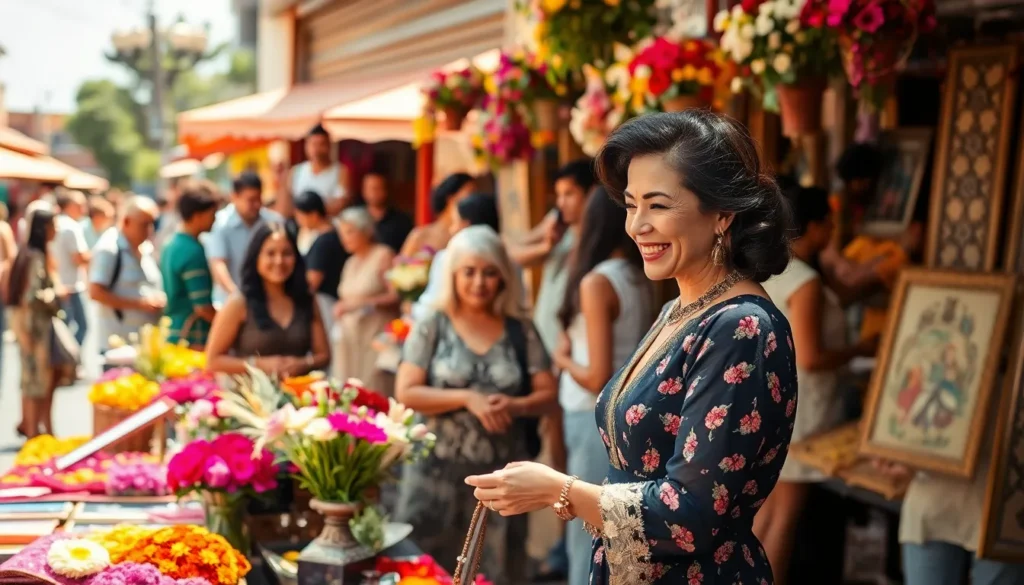
When it comes to expressing beauty, every language has its own charm, but Spanish takes it to a whole new level. Imagine strolling through a vibrant mercado, and you hear someone describe a stunning sunset or a lovely person with just the right word. If you’ve ever wanted to impress your friends or woo that special someone, knowing how to say “beautiful” in Spanish is a must.
Understanding The Term “Beautiful”
The term “beautiful” translates to “hermoso” for masculine forms and “hermosa” for feminine forms in Spanish. Understanding these nuances enhances clarity in conversations.
Definition and Context
“Hermoso” and “hermosa” describe aesthetic appeal, encompassing physical, emotional, and intellectual beauty. Its usage extends beyond appearances, applying to art and nature. In phrases such as “una vista hermosa,” meaning “a beautiful view,” context defines the term’s application. Spanish speakers often incorporate the word into everyday scenarios, highlighting its versatility and significance in everyday language.
Cultural Significance of Beauty
Beauty holds a prominent role in Spanish-speaking cultures, often linked to art, fashion, and literature. Celebrations frequently emphasize this concept, infusing life with vibrancy. Festivals showcase beautiful costumes and decorations, demonstrating how beauty manifests in community pride. Moreover, local sayings reflect cultural values, revealing deep-rooted beliefs about beauty. Understanding this term aids in grasping broader cultural connections and expressions.
Ways To Say “Beautiful” In Spanish
Understanding various terms for “beautiful” enriches communication in Spanish. Different words carry unique connotations, making conversations more expressive.
Common Translations
The primary translations include “hermoso” for masculine forms and “hermosa” for feminine forms. One may also consider “bello” and “bella,” which convey similar meanings but are often used in poetic contexts. “Bonito” and “bonita” serve as alternatives, emphasizing charm rather than deep beauty. Context matters when choosing which word to use, as both “hermoso” and “bello” appear in literature and art, enhancing artistic descriptions.
Usage in Different Contexts
In everyday conversations, “hermoso” frequently describes people or landscapes. “Hermosa” often complements discussions about women, nature, or art. During cultural events, “hermoso” might reference traditional costumes or decorations. In romantic contexts, using “hermosa” or “bello” highlights admiration. Moreover, “bonito” and “bonita” can fit casual compliments. Affectionate phrases like “Eres hermosa” emphasize personal connection while exploring beauty in various situations.
Expanding Your Vocabulary
Understanding various terms that express beauty enhances language skills significantly. Utilizing synonyms broadens communication and articulates nuanced feelings.
Synonyms for “Beautiful”
Different words convey beauty in unique ways, providing variety in expression. Terms like “hermoso” and “hermosa” carry the essence of beauty in various contexts. Alternatives such as “bello” and “bella” often appear in poetic or romantic expressions. Additionally, “bonito” and “bonita” focus on charm rather than profound beauty. Each of these words fits specific scenarios, allowing for tailored conversations about beauty.
Related Adjectives
Related adjectives contribute to a richer vocabulary in Spanish. Describing beauty involves terms such as “lindo” and “linda,” which refer to something cute or pretty. Other adjectives include “atractivo” and “atractiva,” emphasizing attractiveness over beauty. Expressions like “precioso” and “preciosa” imply precious beauty, often used for cherished items or experiences. Expanding vocabulary with these adjectives encourages deeper and more vivid descriptions.
Practical Examples
Understanding how to use “beautiful” in conversation adds richness to language skills. Knowing specific phrases enhances the ability to express admiration effectively.
Conversational Phrases
“¿Eres hermosa?” translates to “Are you beautiful?” This phrase conveys a deep appreciation for someone’s beauty. Compliments like “Esa pintura es hermosa,” which means “That painting is beautiful,” elevate conversations about art. “Esa vista es hermosa,” or “That view is beautiful,” expresses admiration for scenery. Using these phrases fosters more meaningful interactions.
Descriptive Sentences
“Su baile es hermoso” means “Her dance is beautiful.” This highlights both skill and aesthetic appeal, conveying admiration in performance. “El jardín es hermoso” translates to “The garden is beautiful,” showcasing vibrant natural beauty. Another example, “Las decoraciones son hermosas,” emphasizes the charm of a setting during events. Articulating such sentences enriches descriptions, enabling more vivid communication about beauty.
Mastering the word “beautiful” in Spanish opens up a world of expression and connection. By understanding the nuances of terms like “hermoso,” “hermosa,” “bello,” and “bonito,” individuals can convey deeper feelings and appreciation for beauty in various contexts. This knowledge not only enhances conversational skills but also enriches cultural understanding.
Exploring beauty through language allows for more vivid interactions whether in casual conversations or romantic gestures. As one becomes more familiar with these terms, they’ll find themselves better equipped to appreciate the richness of the Spanish language and the beauty it describes. Embracing these expressions can lead to more meaningful connections and experiences in both personal and cultural realms.

![cbt therapy, cbt therapy near me, stress anxiety treatment, cognitive behavioral therapy, local cbt clinics, anxiety relief options, stress management therapy, cbt therapists in [location], mental health therapy, therapy for stress and anxiety](https://pagerehabhc.com/wp-content/uploads/2026/05/airtable_6a03870aadea6-1-1024x576.jpg)
